

The History of Cricket
Cricket, also known as the “gentleman’s game,” is a sport rich in history and tradition. Many people don’t know the history of cricket. It started in the sixteenth century. Over the years, cricket has grown from a local activity in England to a global phenomenon with millions of admirers worldwide. This article explores the intriguing history of cricket, from its inception to the modern sport it is today.
Early Origins
Cricket’s roots are uncertain, but it is often assumed to have originated in southeastern England during the 16th century. The first clear reference to the sport appears in a court case over a school dispute in Surrey, England, in 1598- when “cricket” was mentioned. Cricket was a well-established pastime in England’s southern counties by the early 17th century.
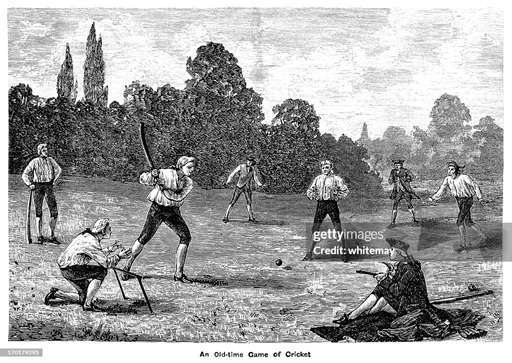
18th Century: The Birth of Organized Cricket
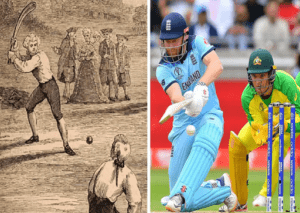
Cricket saw great growth during the 18th century. The game rules were more defined, and it gained appeal outside of southern England’s rural districts. The creation of the Hambledon Club in the 1760s marked a watershed moment in cricket history. This Hampshire-based club helped shape the modern game by introducing many rules that still govern cricket today.
In 1774, a gathering at the Star and Garter Hotel in Pall Mall, London, resulted in the drafting of the first codified set of rules for the game, known as the “Laws of Cricket.” The foundation for standardizing the game and extending its reach to new locations is provided by this codification.
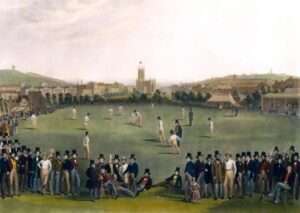
19th Century: The Global Expansion history of cricket
Cricket evolved from a local pastime to a worldwide sport in the 19th century. The spread of cricket throughout the world was greatly aided by the growth of the British Empire. The game was brought to South Africa, the West Indies, Australia, and India by British settlers, sailors, and soldiers.
The Marylebone Cricket Club (MCC), which was founded in 1787, played a significant role in the global development of cricket and took on the role of defender of the Laws of Cricket. In 1844, the first international cricket match between the United States and Canada took place. However, England’s visits to Australia were the true catalyst for the growth of international cricket.
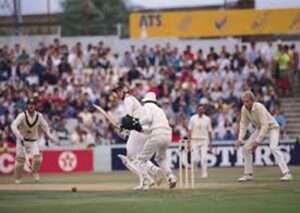
An intense and long-lasting rivalry known as The Ashes began when England and Australia played their first official Test match at the Melbourne Cricket Ground (MCG) in 1877. The Test cricket format, which is still the highest level of the game today, was established by this match.
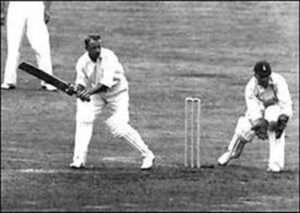
Early 20th Century: The Rise of Domestic and International Competitions
Domestic cricket competitions were established in the early 20th century, and they were crucial in fostering and developing talent. Among the well-known domestic competitions that arose during this time were the Ranji Trophy in India, the Sheffield Shield in Australia, and the County Championship in England.
As additional nations joined the ranks of Test-playing nations, international cricket also gained prominence. The West Indies in 1928, New Zealand in 1930, and India in 1932 were the next three Test nations, after South Africa in 1889. These advancements helped the game gain popularity and expand throughout the world.
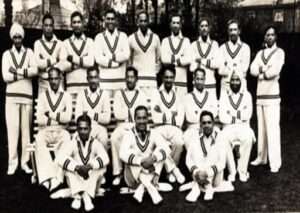
Mid-20th Century: The Advent of Limited-Overs Cricket
With the advent of limited-overs formats in the 1960s and 1970s, cricket underwent tremendous upheaval. The fast-paced, contemporary lifestyle was not necessarily compatible with traditional Test matches, which could go on for up to five days. One-Day Internationals (ODIs), also known as limited-overs cricket, offered a more manageable and spectator-friendly format.
After England and Australia played their inaugural One-Day International (ODI) in 1971, the format immediately became well-liked. The sport entered a new era with the first Cricket World Cup, which took place in England in 1975. The World Cup, which showcases the skills of cricket players from all around the world, has grown to become one of the sport’s most prominent competitions.
Late 20th Century: The Emergence of T20 Cricket
With the introduction of Twenty20 (T20) cricket in the late 20th century, cricket saw yet another upheaval. Condensing the game into 20 overs each side, this format was added to increase the entertainment value and draw in new viewers. England hosted the first T20 match in 2003, and the format immediately became popular throughout the world.
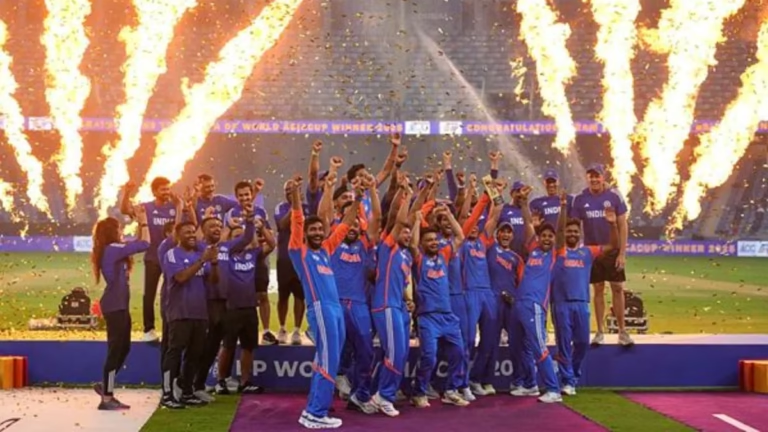
India won the first-ever ICC T20 World Cup, which took place in South Africa in 2007. With its quick tempo, powerful smashes, and exciting finishes, T20 cricket raised the bar for excitement in the game. Additionally, it gave up-and-coming artists a stage on which to display their abilities.
The Modern Era: Cricket’s Global Appeal
With enormous fan bases in nations like India, Australia, England, Pakistan, South Africa, and the West Indies, cricket is a worldwide sport today. Since its 2008 start, the Indian Premier League (IPL) has grown to become one of the most well-liked and profitable T20 competitions globally, drawing elite players and enormous viewership.
The International Cricket Council (ICC) is still essential to the regulation and promotion of cricket on a global scale. Cricket’s appeal to a wider range of audiences is being further increased by new formats like the Women’s Big Bash League (WBBL) in Australia and The Hundred in England.
Conclusion
Cricket’s rise from its modest origins in rural England to its current status as a worldwide phenomenon is evidence of its adaptability and enduring appeal. Over the ages, the sport has undergone tremendous change, adopting new ideas and formats while holding fast to its fundamental principles and customs. Cricket’s rich history serves as a reminder of the game’s incredible legacy and promising future as it continues to flourish and enthral fans around the world. There are so many players all over world now.

Like a gentle breeze in the heat of day, your words bring clarity, calm, and a renewed sense of wonder.